

My YouTube channel has been stuck for months. Solid base of subscribers, decent lifetime views, but recent uploads dying at 400-1,000 views when older ones used to hit 10K+. The algorithm had stopped trusting me. I’d been telling myself I needed a proper content strategy. I’d been “going to fix it” for the better part of this year.
Then I opened Hyperagent and gave it 90 minutes.
By the end I had a complete YouTube operating system - a workflow my future self can run on autopilot, plus a custom AI “skill” that does the heavy lifting for me every Monday morning. I also burned $41 in API credits getting there.
But hold that thought. Hyperagent is awarding $1000 in free credits to early users and I’ve been given 20 of them to hand out. Skip to the bottom if you want one.
What Hyperagent Actually Is
For anyone who hasn’t seen it: Hyperagent is basically a chat interface where the AI doesn’t just answer you. It can browse the web, read pages, write files, build documents, save reusable “skills” you can invoke later, generate images, and chain all of that together inside one conversation. Think Claude or ChatGPT, but the AI actually does the work instead of just describing how you’d do it.
I’d been hearing about it for a few weeks and finally bit. Here’s what I built.
What I Actually Did
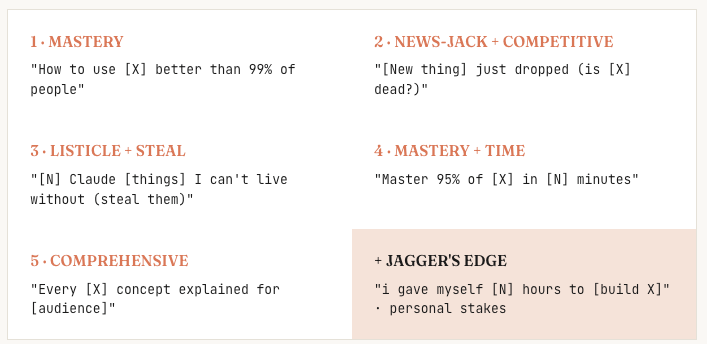
I started by asking Hyperagent to audit a few high-performing AI YouTubers in my niche. Not me - other channels. The ones consistently pulling 100K+ views. I told it to decode their title formulas, thumbnail patterns, video lengths, posting cadence, and what was actually driving their views.
It opened a browser, scraped their channels, pulled view counts, identified five recurring title formulas, mapped their content into pillars, and gave me a side-by-side comparison with my own channel. It did take 30 minutes but was well worth it.
Then I asked it to design a workflow that leverages the identified patterns without copying them. It came back with a positioning rewrite, a three-pillar content mix, a posting cadence I could actually sustain, and a “leverage map” showing what to borrow versus what to differentiate on.
So far, useful. But here’s where it got interesting.
I asked Hyperagent to turn the whole thing into a reusable skill - the kind that lives in my account and runs whenever I invoke it. It built me a two-stage system:
Stage 1 is research. I say “what should I make next?” and it scrapes my reference channels, checks the internet for new AI-related feature releases, scores topic candidates on a five-criterion rubric, and gives me a ranked shortlist of five video ideas across my three pillars. Then it stops and waits for me to pick.
Stage 2 is production. I pick a topic, say “build the package for it,” and it generates a full production doc … five title variants, a 2,000+ word script in my voice, a thumbnail brief specific enough my designer doesn’t need follow-ups, twenty SEO tags, the description, chapter timestamps, a pinned comment, and end-screen instructions. One doc, hand it to my editor.
I tested it the same afternoon. Running Stage 1, it surfaced a Claude feature that dropped six days ago that no major YouTuber had covered yet. Pure whitespace. I’m filming the video this week.
While we were at it, Hyperagent also wrote me a tool-agnostic editor brief template I’m sending my editor on day one, a thumbnail A/B testing protocol, and a feedback loop where I paste my video performance back into the skill every week so it gets sharper over time. It also generated a polished webpage version of the entire system that I can bookmark and re-read.
The whole thing … audit, leverage map, skill, editor brief, bonus pieces, the wrap-up webpag, landed in about 90 minutes of back-and-forth.
What’s Quietly Profound About This
Six months ago this kind of workflow would have meant hiring a YouTube strategist, then a content writer, then a trends analyst. Or carving out a week to figure it all out yourself. Or following yet another guru’s $999 course.
What I actually did was open a chat window, describe what I was stuck on, and let the AI do the work. I made the creative calls. The audit was real research, not generic advice. The skill is mine … it lives in my account, runs forever, and gets sharper the more I feed it performance data.
The shift isn’t “AI helps me think.” It’s “AI builds the thing.” And the thing keeps working after the chat ends.
The Honest Trade-Offs
I owe you the trade-offs because Hyperagent is not free.
The 90-minute session burned $41 in API credits. That sounds like a lot for one conversation, and it is … but Hyperagent is doing real work. It opened browsers. It scraped multiple sites, even watched videos on my behalf! It generated artifacts. It updated a working doc throughout. The cost reflects actual compute, not chat tokens.
For comparison, I’d have paid more than $41 for an hour with a YouTube strategist who’d have given me less than what I got. But still … go in with eyes open. Big builds chew through credits. If you’re just dabbling, you’ll burn a starter balance faster than you think.
The other trade-off: it’s powerful enough that you can absolutely waste credits asking it dumb questions. Use it for the heavy lifts … researching, building, generating. Don’t use it for things you’d ask Claude or ChatGPT about for free.
The Codes
Now the good news.
Hyperagent is awarding $1000 in free credits to early users to actually try building stuff with it and they’ve given me 20 codes to share with subscribers of this newsletter. Each one is enough to comfortably build something real.
https://hyperagent.com/refer/KZGYSWFT
First-come-first-served until they’re gone.
I’m genuinely curious what you’ll build. The point of these tools isn’t replacing the work … it’s expanding what one person can ship in an afternoon.
Cheers, Jagger
If this made you think of someone who’s been “going to fix” their workflow for the past year, send it to them.