

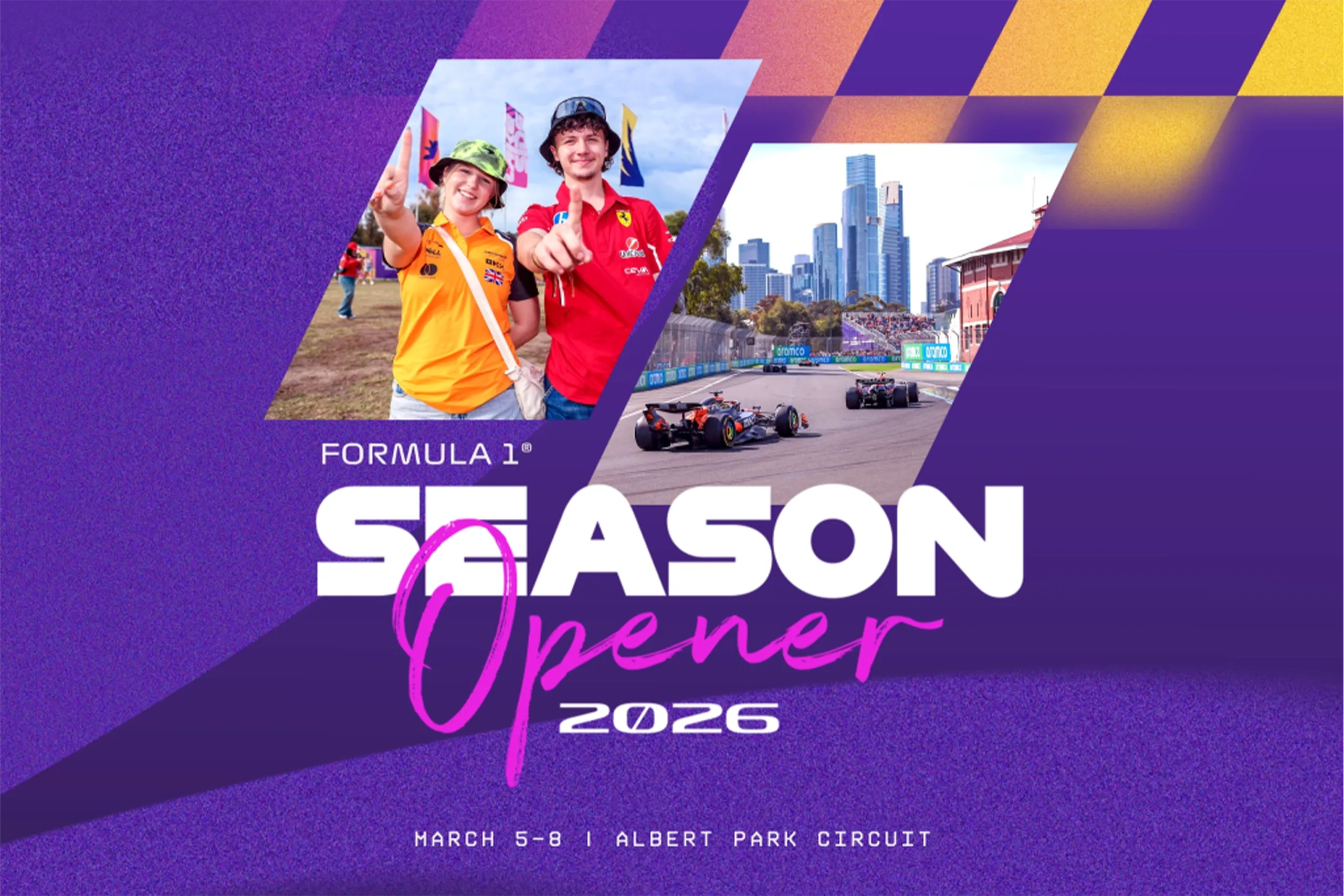
Formula 1 coming back to Melbourne always hits different.
It’s the first race of the season.
Fresh cars.
New regulations.
Everyone saying they’ve “nailed it” until Friday practice proves otherwise.
This year feels bigger than most.
Regulation changes don’t just reshuffle the grid - they expose which teams actually understand the systems underneath. And that’s why I’m more excited than usual.
Because Formula 1 isn’t just resetting aerodynamics or car concepts.
It’s doubling down on AI.
Formula 1 Is No Longer Won on Track Alone
We still like to believe races are decided by bravery under braking or raw driver talent.
That’s part of it. But it’s no longer the whole story.
Modern Formula 1 is about decision systems.
Which setup to bring
How aggressively to run the tyres
When to pit … and when not to
How to react when the race doesn’t follow the plan
Those decisions are now shaped - heavily - by AI-driven simulation and modelling.
Teams run thousands of simulations before a race weekend even starts. Not just for strategy, but for car setup, performance trade-offs, and failure scenarios. AI helps narrow an almost infinite set of possibilities down to a handful worth trying.
This isn’t “AI replaces engineers”.
It’s AI deciding where engineers should focus.
AI Simulation in Formula 1: What Teams Actually Use It For
When people hear “AI in F1,” they often think it’s abstract.
It’s not.
AI is already embedded in:
Simulation workflows
Strategy modelling
Engineering decision loops
Reliability and performance trade-offs
The goal isn’t perfection. It’s speed.
Speed of learning.
Speed of narrowing options.
Speed of making the least-worst decision under pressure.
What I Saw First-Hand at the Melbourne Grand Prix
Last year around the Australian Grand Prix, I attended a Dell x McLaren session where Dan Keyworth, Head of Business Technology at McLaren Racing, walked through how McLaren uses AI and data across the team.
What stood out wasn’t the tech buzzwords.
It was how operational everything was.
AI wasn’t a future roadmap item.
It was already part of how the team functioned day to day.
McLaren talked about AI the same way teams talk about hydraulics or telemetry.
Not optional.
Just part of the machine.
And you could see it working.
Results Don’t Lie
Fast forward to the season results:
McLaren won the Constructors’ Championship
Lando Norris won the Drivers’ Championship
(though I’d be lying if I said I wasn’t rooting for hometown boy Oscar Piastri)
That doesn’t happen by accident.

AI Is No Longer “Quietly” Reshaping Formula 1
People like to say AI is quietly reshaping Formula 1.
I don’t think that’s true anymore.
It’s not quiet.
It’s central.
The difference is most fans only see the output … not the system.
They see:
A perfect undercut
A bold tyre call
A strategy that “just worked”
What they don’t see:
The models that ran overnight
The simulations that killed bad options before the race began
The decision systems ranking scenarios in real time while cars fly past at 300km/h
AI has become the backbone of how F1 teams think.
To prove this point, just a few days ago, Mercedes announced a partnership with Microsoft, where they will aim to turn data into insights, smart decisions and ultimately performance on the track. AI plays a huge role in this.

Why Regulation Changes Make AI Even More Important
Every time Formula 1 introduces regulation changes, uncertainty spikes.
That’s when AI matters most.
When nobody knows what “optimal” looks like yet, the teams with the best simulation, data infrastructure, and decision-making loops adapt faster.
They:
Test more ideas digitally
Fail cheaper
Converge on better solutions sooner
With Melbourne as the first race, we’re about to see who actually understands their systems - and who’s still guessing.
Why Most Fans Still Underestimate AI in Formula 1
Ask the average fan about AI in F1 and you’ll hear:
TV graphics
Strategy predictions
Cool dashboards
That’s the shallow layer.
The real impact is upstream:
Design decisions made months earlier
Strategy frameworks built long before lights out
Operational resilience when things go wrong
Formula 1 teams now operate more like high-performance software organisations than traditional racing teams.
AI is the connective tissue.
Why This Story Matters (and Why I’m Telling It)
I’m a massive Formula 1 fan.
I’m also deep in the AI space.
What excites me about Formula 1 right now isn’t just the racing - it’s how clearly it shows where AI actually adds value.
As the cars line up in Melbourne on 8 March 2026, with new regulations and fresh uncertainty, we’re not just watching a race.
We’re watching the output of thousands of AI-driven decisions made long before the engines fire.
Most people have no idea how much of the sport now runs on that invisible layer.
That’s what makes this season fascinating.
I can’t wait.
If this was useful, subscribe to AI the boring.